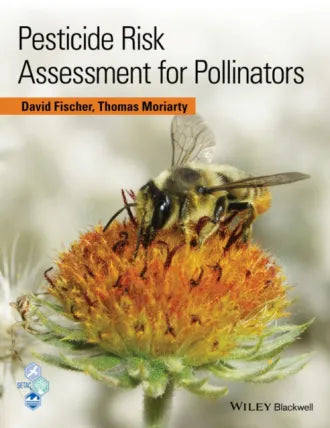
Pesticide Risk Assessment for Pollinators
Pesticide Risk Assessment for Pollinators
ISBN: 9781118852699
Author: Kitaboo eStore
Publisher: Gardners
Published Date: April 29, 2014
Digital eBook
Couldn't load pickup availability
Pollinators play a vital role in ecosystem health and are essential to ensuring food security. With declines in both managed and wild pollinator populations in recent years, scientists and regulators have sought answers to this problem and have explored implementing steps to protect pollinator populations now and for the future. Pesticide Risk Assessment for Pollinators focuses on the role pesticides play in impacting bee populations and looks to develop a risk assessment process, along with the data to inform that process, to better assess the potential risks that can accompany the use of pesticide products. Pesticide Risk Assessment for Pollinators opens with two chapters that provide a biological background of both Apis and non-Apis species of pollinators. Chapters then present an overview of the general regulatory risk assessment process and decision-making processes. The book then discusses the core elements of a risk assessment, including exposure estimation, laboratory testing, and field testing. The book concludes with chapters on statistical and modeling tools, and proposed additional research that may be useful in developing the ability to assess the impacts of pesticide use on pollinator populations. Summarizing the current state of the science surrounding risk assessment for Apis and non-Apis species, Pesticide Risk Assessment for Pollinators is a timely work that will be of great use to the environmental science and agricultural research communities. Assesses pesticide risk to native and managed pollinators Summarizes the state of the science in toxicity testing and risk assessment Provides valuable biological overviews of both Apis and non-Apis pollinators Develops a plausible overall risk assessment framework for regulatory decision making Looks towards a globally harmonized approach for pollinator toxicity and risk assessment